

Location: Everest region
Price: US $1800 P/P
18 Days
Trip Facts
Group Size
2+
Trip Grade
challenging

Accommodation
Tea house / Lodges On trek, Hotel on Pokhara and Kathmandu
Max Altitude
5550 m

Meals
All typical Nepali & International Cuisine from Menu
Transportation
car, aeroplane
Trip Highlights
- Go across the Renjo La, Cho La, and Kongma La crossings, three of the most well-known passes in the Everest region.
- Exciting flight from Kathmandu to Lukla and back
- See the ancient Tengboche Monastery.
- The two main points of view are Kalapathar and Gokyo Ri.
- The area is home to fauna such as the Himalayan tahr, musk deer, and colorful pheasants.
- Gorgeous view of the Khumbu Icefall.
- A breathtaking vista from Kala Patthar (5,555 m).
- Discover the unique culture of the Sherpa people.
- Experience the deep blue waters of Gokyo Lake.
Doing the Everest Three High Pass trek is both difficult and inspiring. There are few treks as exciting and demanding as this one in the Khumbu region. Renjo La Pass, Cho La Pass, and Kongma La Pass are the three high passes over 5,000 meters. All three have to be ascended as part of the Everest High Pass Trek.
The main attractions of the Everest Three High Pass walk are the high passes, panoramic vistas, and glacial lakes. The Gokyo Lakes, Nepal's highest freshwater body, and Tengboche Monastery, the tallest monastery in the Khumbu region, are two more highlights of this trek.
This trek includes a climb to Kalapatthar, the well-known location for views of Mount Everest, in addition to the three passes. One of the greatest locations to see the most spectacular sunrises and sunsets is Kala Patthar.
As your journey follows the natural flow of the Dudh Koshi River, you will soon understand why the Everest Three Passes trek is such a wonderful experience. There, you may recognize the unique culture and way of life that has been cultivated over the ages.
You will spend your nights in their ancient villages, interact with friendly Sherpa people, and gain insight into their way of life. Here, you can view Buddhist monasteries, prayer wheels, flags, and markers along this route.
The Everest Three High Pass route is difficult since it requires a longer ascent or climb in a remote region. It would help if you spent several days sleeping at an elevation of more than 5000 meters. You must be in excellent physical condition to take part in the Everest High Passes excursion.
Everest Three High Pass Trek Clockwise
While doing the Everest Three High Pass trek clockwise, we start from Kathmandu with a flight to Lukla and trek towards Namche Bazaar. From Namche, the trek goes to Thame village and towards the Renjo La pass. The Renjo La pass is the first, and then the second is the Chola pass. After finishing the base camp and Kala Pather, the last pass is Khambela Pass.
Everest Three High Pass Trek Anticlockwise
When undertaking the Everest high pass trek in an anticlockwise direction, we begin at Khambela Pass, followed by EBC and Kalapather. After visiting the base camp and Kalapather, we will cross the Chola pass to reach the Gokyo valley. Following our exploration of the Gokyo lakes and Ri, we traverse the Renjo La pass and arrive in Thame, the birthplace of most climbers. We will reach Namche, then Lukla, and fly back to Kathmandu.
While doing both clockwise and anticlockwise, you will be spending the night at a small teahouse along the route, which only offers the most basic services. So, if you can manage with just the basics, the trek is a good choice.
Outline Itinerary
Day 1: Arrival at Tribhuvan International Airport, Kathmandu (1350m)
Day 2: Fly from Kathmandu to Lukla (2840 m) and trek to Phakding—3 hours
Day 3: Trek from Phakding (2610 meters) to Namche Bazaar—5 hours
Day 4: Acclimatization day in Namche Bazaar
Day 5: Trek from Namche Bazaar (3440m) to Thame (3820m)
Day 6: Trek from Thame (3820m) to Marulung (4210m)
Day 7: Trek from Marulung (4210m) to Lumde (4368m)
Day 8: Trek from Lumde (4368m) to Gokyo (4790m) via Renjo La Pass (5360m)
Day 9: Trek from Gokyo (4790m) to Dragnag (4750m)
Day 10: Trek from Dragnag (4750m) to Dzongla (4830m) via Cho La Pass (5420m)
Day 11: Trek from Dzongla (4830m) to Gorakshep (5140m)
Day 12: Trek from Gorakshep (5140 m) to Everest Base Camp (5364 m), then descend to Lobuche (4910 m).
Day 13: Trek from Lobuche (4910m) to Chhukung (4730m) via Kongma La Pass (5535m)
Day 14: Trek from Chhukung (4730m) to Tengboche (3860m)
Day 15: Trek from Tengboche (3860m) to Monjo (2835m)
Day 16: Trek from Monjo (2835m) to Lukla (2840m)
Day 17: Flight Back from Lukla (2840m) to Kathmandu (1400m)
Day 18: Final Departure
Itinerary
A wonderful scene from your flight greets you at the starting point of all of Nepal's treks. Once you have finished the visa procedures and picked up your bags at the airport, you will go to your accommodation in Thamel, a well-liked tourist destination in Kathmandu.
You will be free to spend the remainder of the day after that. You can either relax at your hotel or explore this lively, interesting city. At this time, you can also pick up your trekking permits and other required documents.
One of the many restaurants in the area can serve you some of the regional Nepali food. Before going back to your hotel, you should take some time to browse the markets and stores along the bustling streets of Thamel.
Your journey on the Everest Three Passes Trek begins today. You'll drive to Tribhuvan International Airport's domestic terminal early in the morning to board a flight to Lukla. The flight lasts for about thirty minutes.
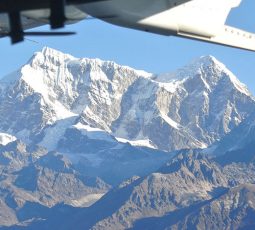
This amazing flight offers remarkable views of the Annapurna and Langtang Himalayan ranges. The flight to Lukla typically departs from Kathmandu during off-peak times. Peak seasons see an increase in air traffic, leading to the flight to Lukla from Ramechhap/Manthali.
When your plane lands at Lukla Airport, the porters and other crew members will be waiting to help you. The trek starts with a descent towards the Dudh Kosi River, where you connect with the main Namche Bazaar trail.
You can easily hike the Dudhkoshi Valley in three hours. You will encounter winding trails and risky suspension bridges alongside the Sherpas' herds of yaks. From Chheplung, you will descend to Phakding. You will have the chance to visit the Rimishung Monastery and Pemacholing.
After having breakfast at the hotel, your adventure will begin in Phakding. There will be several river crossings on your journey in addition to uphill and downhill terrain. Along the path, you'll see beautiful pine forests and scattered yak pastures.
High suspension bridges allow you to cross and recross the river. On your way to the Sagarmatha National Park entryway, you'll pass Monjo Village, thick forests, and rough trails. You will pass another suspension bridge covered with prayer flags as you reach the national park and then gradually ascend the hill.
Suddenly, the path heads up a steep hill to Namche Bazaar from the settlement of Jorsalle. But you'll keep going until you get to Namche Bazaar. The primary trading center of the Khumbu region is Namche Bazaar. Another name for it is the Gateway to Everest.
If you're lucky enough, you may enjoy the stunning views of Everest on a clear day. You will also be able to see Thamserku and Kongde Ri up close to Namche Bazaar.
To acclimatize and adjust to the thinning air, you will spend a day in Namche Bazaar. Having an acclimatization day before ascending into the Himalayas is essential. You'll grab the chance to trek up to the beautiful village of Khumjung to maintain some level of activity and keep your feet moving.
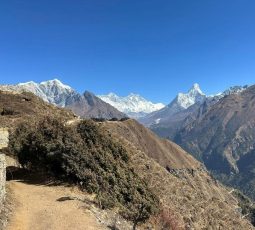
You will also stop by the Everest View Hotel on your route to Khumjung. The Everest View Trek is popular, and people book it to see Everest from this point of view. From the Everest View Hotel, you can take breathtaking views of Ama Dablam, Thamserku, Nuptse, Lhotse, Kangtega, Taboche, and Kwangde
You can view century-old chorten (stone Buddhist monuments) as you ascend. When you get to Khumjung, you will also see the hundreds-year-old Khumjung Monastery. You will have the opportunity to tour the village's historic monastery, which is home to a rumored Yeti scalp, as well as the Sir Edmund Hillary-constructed local school.
If you have time, you can also visit the local village, trek to Thamo, explore Khunde, or visit the Sherpa Museum. You'll head back to Namche Bazaar in the evening to stay the night. Many people come up here for short trekking trips to see Everest.
Today is a relaxing walk. The path goes through a lovely forest with colorful flowers and enormous trees of rhododendron and oak. You'll see small farms and follow a river called Bhote Kosi.
You'll reach Thamo village. This place has a small power plant that makes electricity for the area. Keep walking and you'll cross a small bridge. Look for lovely Buddhist paintings on the rocks nearby.
A short walk more and you'll get to Thame. This village is quiet, and not many travelers come here. If you have time, you can visit an ancient monastery in Thame.
Start your day by visiting the monastery in Thame. Then, begin your walk on the path above the Bhote Kosi River. You'll pass through two villages: Thyangmoche and Hungmo. Thereafter, the area becomes hushed and pristine.
You'll see places where yaks graze, making it beautiful scenery. As you go higher, there are fewer plants around. The land starts to look dry.
You'll pass a place called Taranga. Keep going a bit more, and you'll reach Marlung. This location is where you'll sleep for the night.
This walk takes about 4 hours. Remember, you're going up to 4.
Today, you keep walking higher. You're on a path that people used long ago to trade salt between Khumbu and Tibet. Instead of going to Tibet, you'll turn to the northeast.
Your stop for the night is a small village called Lumde. It's 4368 meters high. From Lumde, you can see gorgeous views. Look around and you'll spot big, snowy mountains all around you.
Today is a long, challenging day of walking. You'll walk up very high, crossing Renjo-La Pass at 5,360 meters. From the top of Renjo-La, you can see wonderful views. Look far away and you'll spot the Gokyo valley with its shiny lakes.
As you walk, you'll pass some small icy lakes. The path is steep and can be slippery, so be careful.
At the top, you can see numerous enormous mountains. Some of the most significant are:
- Everest (8,848 m)
- Lhotse (8,516m)
- Cho Oyu (8,201m)
- Taboche (6,367m)
- Cholatse (6,335m)
After enjoying the view, you'll go down to Gokyo Valley. The valley is next to the third Gokyo Lake. In the evening, you can walk by the beautiful lake if you're not too worn out.
Today, you start walking again. You'll go past a big ice field called Ngozumpa Glacier. The path is rocky and goes up and down a lot. You'll walk along the east side of the glacier. The views are lovely and will help you keep going.
At the end of the day, you'll reach the final destination for today, Dragnag. Some people call it Thangnak too. There are a few places to stay here.
Dragnag is a good place to stop because it's close to the next big climb. Tomorrow, you'll go over the Cho La pass.
Today is a challenging day. You'll climb over a high mountain pass called Cho La. Start early after eating breakfast. You'll go up steep steps and then cross a glacier on the east side.
The top of Cho La is very high—5,420 meters! It can be difficult to cross if there's snow. But from the top, you can see wonderful views of giant mountains and a glacier called Cholatse.
Going down from the top, be cautious. You'll pass a small lake on the way to Dzongla. You'll sleep in Dzongla tonight. You'll probably be exhausted after this tough day of walking!
Today, you walk towards Gorakshep. On the way, you'll pass through a village named Lobuche. Many people who are walking to Everest Base Camp come through Lobuche too.
As you walk, you'll see incredible mountains all around you. To get to Gorakshep, you walk along the left side of Khumbu Glacier. The path goes up steeply at the end. This location is where you'll rest tonight. In the evening, a hike to Kalapather is also an option.
Today is a precious day! You'll walk to Everest Base Camp. This hike takes about 2 hours from Gorakshep. The path to Base Camp goes up steeply. You'll walk on rocky ground left by old glaciers.
At Everest Base Camp, you'll see wonderful views of mountains such as Lhotse, Nuptse, Khumbutse, and many more.
After enjoying the views, you'll walk back to Gorakshep. Then, you'll keep going down to Lobuche. This is where you'll sleep tonight. Lobuche is lower than Gorakshep and Base Camp, so you might feel better here.
Today is a tough day. You'll go over the last of three big mountain passes. This one, called Kongma La, is the hardest.
You start walking from Lobuche. The path up to Kongma La isn't too steep. You'll see some frozen lakes on the way. From the top of Kongma La, you can see mountain giants including Lhotse, Lhotse Shar, Ama Dablam, Makalu, and Baruntse.
Then you go down into a valley called Nigyang Khola Valley. You end up in Chukhung village. Not many people live in Chukhung all year.
Sherpa people bring their yaks here for grazing. More hikers are now visiting Chukhung to acclimate to the high altitude before ascending the nearby mountains. You will have an encounter with some of the people coming for peak climbing at Chhukung.
Today, you go down into the Imja Khola valley. You'll walk through Dingboche village. This place is known for its potato fields with stone walls.
On the way, you'll see some small buildings called Kharkas. These are in places named Tsura, Orsho, and Shomare. Farmers use these when they bring animals up high to eat grass.
Next, you reach Pangboche Village. People live here all year round.
Finally, you arrive in Tengboche.
In Tengboche, there's an old Buddhist monastery named Tengboche Gompa. It's the oldest one in this area. You can visit it if you like. You'll sleep in Tengboche tonight.
Today, you'll descend a lot. You start by walking down for a long time until you reach the Imjatse River in a place called Phunge Tenga. After crossing a bridge, you go up a short, steep hill. Then the path is easier as it winds its way to Namche Bazaar.
You'll have a short break in Namche Bazaar. Then you keep going down to the Dudh Kosi River valley. The path goes up and down a bit. Soon, you'll see the gate of Sagarmatha National Park. This location is where you entered the park days ago.
A little more walking brings you to Monjo village. This is where you'll sleep tonight. Monjo is much lower than where you started today. The air will feel thicker here, and you might find it easier to breathe.
Today is your last day of walking on this Everest Three Passes Trek. You've seen wonderful things in the high mountains and valleys of the Khumbu area.
You'll walk back to Lukla. You should get there around lunchtime. After lunch, you have spare time to rest or look around Lukla.
In the evening, you'll have a special dinner. This day is to celebrate your trip. You can enjoy it with the other people who walked with you and with the guides and porters.
More than six planes per day, beginning early in the morning, arrive at the Lukla airport. The Lukla to Kathmandu flight typically operates in the morning because of the harsh weather in the afternoon.
You rise early, eat a hearty meal, and prepare for the arrival of your plane. Remember to select a seat on the right side to catch another glimpse of the alluring mountains. Now, you will also say goodbye to the porters and the local crew who helped you on this journey.
When you get to Kathmandu, you can choose to relax or go last-minute shopping in Thamel. Additionally, you can purchase gifts for friends and family back home or memories.
You carry numerous photos of some of the highest peaks in the world with you as your journey comes to an end today. The time has arrived to depart from this wonderful nation. You'll be ready to say goodbye to a nation that gave you the incredible opportunity to complete three high passes.
It is advised to arrive at the airport two to three hours before your booked trip home. Additionally, you have the option to extend your trip by choosing a different package.
What's included?
Everest conservation permits from Sagarmaha National Park
The cost for the Everest High Pass trekking map is provide each one.
A full board plan (breakfast, lunch, and dinner) is provided during trekking.
Hotel on a bed and breakfast plan during the Kathmandu stay.
An experienced license holder guide and required porters. (1 porter for two trekkers and there will be 1 assistant guide for more than six trekkers.)
We provide both international and domestic pickup and drop services.
Medical kit box and required medicine for the trek.
Round tickets to Kathmandu-Lukla for trekkers, guides, and assistant guides.
Trekking equipment like a down jacket and duffel bag will be provided.
TIMS Card (Trekkers Information Management System).
All necessary transportation during sightseeing.
This includes food, drinks, salary, equipment, insurance, transportation, accommodations, and local taxes for guides and porters.
All government tax and VAT.
Welcome and farewell dinner with us.
What's not included?
- This does not include your travel insurance.
- Your international flights and departure tax
- Any expenses of a personal nature.
- Tips for guide and porters.
- Nepal entry visa fee.
- Any kind of bar bills (alcoholic and non-alcoholic drinks.)
- Rescue operation in case of emergency.
Departure dates
Private trips are available on any date of your choice at any time of the year. Let us know about your preferred travel dates and we shall organize it as per your convenience. Get in touch with us via bellow contact us form.
Essential Information
Best Time for Everest Three High Pass Trek
The weather is the most important component. Although trekking is easy during certain seasons, both residents and travelers trek to Everest Base Camp throughout the year. For the Everest Three High Pass Trek, spring and autumn are the best times to go. Let's explore the ideal times to travel and evaluate the benefits and drawbacks of each.
Spring (March to May):
Many hikers visit in the spring, which starts in March, to avoid the wettest conditions. Although spring temperatures are generally milder, nights can still be chilly and snowy. Every day as you ascend higher, the temperature will decrease significantly.
When the temperature warms, the previously dormant vegetation and creatures suddenly become active. Rhododendron blossoms in particular are abundant on the slopes. Throughout these months, the area experiences temperatures ranging from 18°C to -12°C.
You get a clearer, more detailed view of the Khumbu region. In Nepal, the trekking season formally begins in March. There will be a noticeable rise in the number of visitors using the trails.
Summer/Monsoon (June to August):
In Nepal, the rainy season lasts from the end of June until mid-August. Landslides, muddy, slick roads, and heavy downpours are common features of the monsoon season. Rain gear and season-appropriate apparel must be considered.
Between 27°C and 5°C is the hottest temperature range during the monsoon seasons. There's a potential that at this time, flights to and from Lukla could be canceled. But, because fewer people visit during this time of year, this month is excellent if you want quiet strolling paths.
The extreme heat and humidity that come with this wet season are present outside. Floods and landslides are also more likely as a result of the continuous rains.
Winter (December to February):
Winter brings freezing temperatures and precipitation to the Everest region, making it challenging to climb to the high altitudes. Additionally, there is a lot of snowfall there. The area is unusually cold, and there is a lot of snow on the pathways.
At lower altitudes, daytime temperatures can vary from 0°C to 10°C, but higher elevations will see significantly lower temperatures. But winter offers you a fantastic chance to see the snow in the Khumbu region. In the Himalayan range, wintertime snowfall has a mysterious quality.
Trekking at this time of year demands preparation with an experienced trekking guide and the appropriate cold-weather clothing. During this winter trek, you must exercise extreme caution.
Autumn/Fall (September to November):
In Nepal, the autumn is another well-liked trekking season. For the Everest 3 High Passes Trek, this is also one of the best seasons. Although autumn is slightly colder than spring, it offers excellent mountain vistas.
Autumn also brings a fairly dry climate with lower chances of precipitation and snowfall. There will be clear skies, comfortable temperatures, and stable weather. Because the skies are usually clear, trekkers may take in stunning panoramas of the snow-capped mountains set against an unforgettable blue sky.
Trekkers from all over the world travel to Nepal during the autumnal season to enjoy the festivities. Hindus celebrate their most significant festivals during these months, so you may fully immerse yourself in the joyous atmosphere.
Autumn temperatures range from the lowest point at -10 degrees Celsius in Gorekshep to the highest point at 25 degrees Celsius at Lukla/Phakding.
Note: Determine the best time for the Everest Three High Pass Trek to ensure a great experience and to complete the trek without difficulties.
Everest Three High Pass Trek Difficulty
Compared to the traditional Everest Base Camp Trek, the Three Passes Trek is regarded as being slightly more difficult. It is challenging to travel to this remote and stunning location because there is no road access.
It includes an exciting ascent over the three high passes in the area, Renjo La, Kongma La, and Cho La, which are all over 5000 meters high. The trail twists through many side valleys and climbs and drops, so you might walk for up to seven or eight hours a day there.
Therefore, the trek is appropriate for trekkers who have already experienced trekking; you do not need to be a professional athlete or mile runner. Therefore, the journey will be more pleasant and enjoyable depending on how active you are.
Cardiovascular exercises such as walking and running are excellent ways to be in shape for your chance to explore the Three High Passes. The Everest Three Passes trip is difficult because of the elevation and required acclimatization.
It takes more physical effort to trek at a higher height than it does at a lower one. The Everest Three Passes journey reaches its highest point at Kongma La Pass. Breathing becomes harder as you ascend higher due to the thinner air. It is possible to help your body adjust to the thin air by resting at a lower elevation before traveling to a higher elevation.
While the Everest trekking route has undergone some development, other trekking regions such as Gokyo Valley and Thame Valley remain relatively undeveloped. Along the walking routes are typical teahouses with inadequate facilities.
While trekking, mental fitness is the most crucial aspect. One of Nepal's most isolated locations is the Everest area. You will miss both taking a hot shower and getting into your warm bed. One of the primary three-pass trek difficulties is mental fatigue as well.
Since the walk takes several days, patience and self-awareness are essential. The pace should be focused, and each person's progress should be acknowledged.
Foods During Everest Three Pass Trek
Because you will be climbing to such high altitudes on your adventure, you are going to require extra nutrition, primarily in the form of proteins and carbohydrates. For you to stay healthy and full of energy, you need a nutritious food diet rich in hygienic foods.
Trekking at high altitudes should be done without non-vegetarian food or drinks such as beer, wine, or other alcoholic beverages. A range of meals are available at teahouses along the Everest Three Passes Trek. The Everest base camp trek food is similar to that of the Everest high pass areas.
Popular tourist spots like Namche and Lukla offer even foreign cuisine, crafted by talented chefs. Due to the difficulty of transportation, food options may become less varied, and prices may rise as you ascend.
Breakfasts:
The lodges and guesthouses where you spend the night while hiking serve breakfast. For any hiker, breakfast is without a doubt the most crucial meal of the day. Here is a list of the most well-liked breakfasts in the area.
Tibetan breads, also known as Gurung bread in the Annapurna region, are oil-fried.
Corn husks.
Chapati, a dry wheat bread from the area, is typically served with cheese.
Eggs can be served in various forms, such as scrambled, boiled, or fried. A major energy source, porridge is a comforting, warm grain staple.
Jam-topped French toast.
You can enjoy it with peanut butter and honey.
Muesli.
Hash browns.
pancakes.
cereal with milk.
vegetable-based products.
Milk tea and black tea are only two of the many variations available to satisfy your daily caffeine fix or the soothing flavor of tea.
Lunch:
On the Everest Three High Passes Trek, lunch and dinner options range from simple eats like Tibetan bread with jam to a variety of meat and vegetable meals. The menu includes both popular and traditional foods designed to meet a trekker's physical and spiritual needs.
A range of sandwiches, pizza, rice with curries, burgers, dumplings, and macaroni will be served for lunch, along with a selection of soups, steaks, potatoes, yak steak, and desserts. Thukpa (noodle soup) and momos are also served.
However, nothing compares to Dal Bhat's nutritional worth and energy. This traditional Nepalese food is served with rice, vegetables, pickles, lentil soup (dal), and occasionally meat (usually buffalo or chicken).
Dinner:
The menus for dinner and lunch are the same, and choosing a hearty meal for the evening usually consists of regional dumplings, noodles, pasta, spaghetti, or muesli. The meals on the menu are freshly prepared and healthful, and they are served to mountain hikers by hygienic experts.
In certain places, the traditional Himalayan dish called sherpa stew tastes like a milder vegetable stew, but in other places, it tastes more like a fiery veggie curry. The stew has an abundance of fresh ingredients, such as onions, garlic, carrots, green beans, and greens.
Accommodation On Everest Three Pass Trek
Along the route, there are several places to stay. There are numerous tourist-friendly tea houses along the Everest Three Pass Trek route, offering simple lodging options. Another crucial aspect of the journey is accommodation.
In contrast to other trekking routes, this trail's lodging options have improved and grown over time. However, accommodations in the upper regions remain basic; the facilities are restricted to the lower sections.
The most typical lodging along the trekking trail is found in teahouses or lodges. Typically, the rooms simply have two or three single beds, lovely and warm blankets, pillows, and comfortable mattresses. They may or may not have adjoining bathrooms and wonderful views.
For female travelers traveling alone, a single private room will be available during the trek for an additional fee. The qualities of lodges differ geographically. Usually, local resources like stone, wood, and tin are used in their construction.
Showers heated by gas or solar power are available in most tea houses. A hot shower recently cost between $2 and $6 USD. There is no charge for the cold showers. In the Everest region, mid-range lodges are becoming more and more popular since they are more sophisticated and practical than tea houses. They are the perfect balance of affordable prices and excellent amenities.
A few lavish lodges have opened up along the trekking trails in the Everest region in recent years. The bakeries and coffee shops in Kathmandu are symbolic of towns like Lukla, Namche, and Dingboche.
They offer great dining options in addition to cozy rooms. However, you won't find typical lodgings up ahead of Namche or at a higher height. The accommodation at Everest Base Camp is a little better than the high-pass accommodation.
Drinking Water On Everest Three Pass Trek
You must drink a lot of water because it's important to stay hydrated at higher elevations. For trekking in high altitudes, water is essential because it's the best defense against severe alpine sickness.
Water for trekking can be obtained at any trekking lodge or shop along the route; a standard bottle of mineral water costs one to three dollars per liter. Although it's a convenient choice, be aware that prices may vary.
Many hikers treat water from taps or streams using water filters or water purification tablets. These tablets kill germs and dangerous microorganisms. Pump filters and straw filters are two examples of the various types of water filters available.
UV purifiers disinfect water by using ultraviolet light to destroy bacteria. These portable gadgets have the potential to treat water effectively. However, in really cold or dirty water, they may not be as dependable.
Drinking tap water directly on the Everest Three Passes trek is generally discouraged due to the risk of waterborne illnesses. It is therefore strongly advised to bring a reusable water bottle for drinking water. You can ask for safe water at the local lodges and tea shops along the journey, as many offer boiled water for a little cost.
Remember that during hikes at high altitudes, being well-hydrated is essential. For this reason, it is highly advised that you pack a reusable water bottle for the Everest Three High Passes Trek to carry water.
Electricity On Everest Three Pass Trek
Therefore, the internet and electricity facilities are quite good when compared to other hiking locations in Nepal. On the Everest Three High Passes path, electricity is available at most teahouses.
The tea house features solar panels before and after the passes and a high elevation if there is no electricity. Electronic device charging, such as those for phones and cameras, is typically an additional expense.
It is advised that you get a backup battery and power bank in case the power goes out for a few hours or a day in order to ensure that you don't miss the opportunity to photograph the unique sight.
To charge your electrical gadgets, it is highly advised that you bring a power bank. Also, charging stations will be in high demand throughout the busy trekking season. Purchasing an electric plug adaptor is advised if necessary, as some tea places lack universal plugs.
Depending on the location and elevation, the basic cost to recharge an electrical gadget ranges from $3 to $7 US. Therefore, sunshine serves as a great solar charger, which is why trekkers in remote locations frequently use it.
Communication on Everest Three Pass Trek
The Everest Three High Passes Trek's isolated and high-altitude setting will make communication (both mobile and Wi-Fi) difficult. In certain sections of the trek especially at lower elevations, Ncell or Nepal Telecom may have irregular mobile network coverage.
Depending on the exact trekking path you are on and the altitude you are at, different cell phone signals are available at different times. Ncell and Nepal Telecom are the two largest cellular network operators in Nepal. They offer data, SMS, and voice calls, among other things.
On the Everest 3 High Passes Trek, utilising the Wi-Fi in the lodges and teahouses is included in a nominal service cost. While trekking in the Everest region, getting in touch with your loved ones won't be a problem. Wi-Fi reliability and speed can differ considerably amongst teahouses. Remember that as you get higher in altitude, Wi-Fi may become less accessible.
For emergency communication, certain teahouses and hiking guides may have satellite phones in more isolated locations without internet access or cell phone coverage. They are more dependable and offer superior coverage in remote areas, despite their potential cost. It's a means of communicating in an emergency.
The Everest Link Network, a private Wi-Fi network, covers certain regions of the Everest region. This is accessible in well-known trekking locations like Tengboche and Namche Bazaar. However, the network might not be accessible for the whole trek through the Everest Three High Passes.
Although it has improved recently, communication throughout the Everest region journey is still limited. In addition to satellite phones, high-altitude communication devices like High Frequency or VHF (Very High Frequency) radios are sometimes taken on journeys.
Permits Required for Everest Three High Pass Trek
There are currently two different kinds of permits needed for trekking to the Everest Three High Passes Trek. First and foremost, a Sagarmatha National Park permit is required for all trekkers to enter the Everest region.
Sagarmatha National Park, a UNESCO World Heritage Site, encompasses most of the Everest Region. It has the biggest glaciers and the tallest mountains in the world. The Three Passes Trek Permit cost supports park maintenance and conservation initiatives within the protected Sagarmatha National Park.
The Sagarmatha National Park Entry Permit will be useful once you arrive in Lukla and go to Phakding and other places. An entry permit to Sagarmatha National Park can be obtained at the Nepal Tourism Board located in Kamaladi, Kathmandu. You can hike up to Monjo Village and get it at the accessible checkpost if you are already in Lukla.
The price to enter the Everest Region National Park is shown below:
- NPR 100 per person for Nepalese, except 13% VAT.
- NPR 3,000 per person for foreigners, excluding 13% VAT.
- NPR 1500 per person, excluding 13% VAT, is available to SAARC residents.
Permit is not needed for children under ten years old.
Trekkers also need a Khumbu Pasang Lhamu Municipality Entry Permit in order to complete the Everest Three High Passes Trek. The TIMS card system was replaced by the regulation in 2018, which came into effect after the Khumbu region was designated as a Khumbu Pasang Lahmu Rural Municipality.
The ticket, which was introduced in recent years, guarantees that tourism would benefit the area without endangering it. It also guarantees the region's sustainable development. All individuals, including SAARC nationals and non-residents of Nepal, must pay the same amount for the Khumbu Pasang Lhamu permit.
A Khumbu Pasang Lhamu Municipality Entry Permit costs NRs. 2000 for each individual. It costs more for visits greater than four weeks, and NPR 2500 per person. The permit fees are excluded from VAT.
This permit is available from the Tourism Board in Kathmandu. You can obtain it from Lukla or Monjo Checkpost if you are already in the Everest Region. Therefore, the following documents are required in order to receive a trekking permit:
- A copy of your passport.
- A copy of a current visa that is good for at least the number of days needed for hiking.
- Agreement with the Agency.
- Schedule of Trekking Programme.
- Documents related to the hikers' insurance.
- The appropriate fees for each Everest Three Pass permit that a trekker purchases must be paid.
You can obtain the permits independently. On the other hand, you can also search for authorized trekking companies. As part of the service, they help you get permission. Another important driver of the local tourism sector in Nepal is a permit. Locals' infrastructure, way of life, and growth will all be directly impacted by this.
Equipment List for Everest three high pass trek
One of the hardest Everest treks in the Everest region is the Three Passes Trek. One of the most important things you should think about before starting this trip is the packing list. Throughout the day, you will experience a range of weather patterns on your journey.
However, certain items could change based on the time of year and how long you want to spend trekking. Selecting gear that is lightweight and multipurpose is highly advised, as is minimizing unnecessary items.
- Clothing
- One half-sleeve shirt and two full sleeves.
- Thermal tops.
- A windproof jacket.
- A jumper.
- Remember to pack a down jacket.
- a water-resistant coat.
- Carry a headscarf.
- a warm, protective wool hat for your ears.
- Waterproof pants.
- Trekking trousers.
- Sunglasses, wool cap, and gloves.
- Footwear:
- Boots for trekking.
- Sandals for the city and tea houses.
- Winter hiking boots for reaching the base camp.
- Lightweight and thin inner socks.
- Insulating, thick wool hiking socks.
- Basic gears:
- Backpack.
- Warm-up container.
- water filtration.
- Trekking pole.
- Bags for sleeping.
- Personal Care Items:
- Paste for teeth.
- Tweezers.
- Soap, shampoo.
- Nail clippers.
- Antibacterial hand wash, and toilet paper.
- A towel of average size.
- Extra items
- First aid package.
- Notepad and writing instrument.
- Additional passport photographs and copies.
- Binoculars.
Depending on the season of the trip, the 3 Passes Trek packing list should be adjusted. If you trek in the winter or monsoon, you need to pack extra gear, rain gear and warm clothes. At Thamel, Lukla, or Namche Bazaar, you can affordably buy or rent trekking gear and equipment for the Everest Three Passes Trek.
Visa Information to know before Everest three high pass Trek
A lot of travelers arrange their visas in advance of their trip to Nepal by using the Department of Immigration website. Applying for a visa at Tribhuvan International Airport upon arrival in Kathmandu is another option.
All foreign visitors to Nepal, excluding Indian nationals, need to have a current visa. Obtaining a visa upon arrival is typically less expensive than applying through an embassy or consulate.
The cost of a visa for foreigners wishing to visit Nepal for the first time during the year will be as follows:
- $30 USD for a 15-day visa with multiple entries.
- A 30-day multiple-entry visa costs $50 USD.
- $125 USD over a period of 90 days visa for multiple entries.
At the Immigration Office in Pokhara or the Department of Immigration in Kathmandu, visas can be extended while in Nepal. A visitor cannot stay in Nepal for more than 150 days total during the duration of their visa year.
The requirements to obtain a visitor's visa are:
- Two passport-sized pictures.
- A passport that is valid for at least six months.
- A cash payment for the visa fee is required.
- For visas obtained at airports or immigration entry points, the application form must be completed.
Travel Insurance Importance
Imagine yourself exploring the Everest region while encircled by the magnificent Himalayan mountain range. Travel insurance is one important item you must take care of before setting off on a journey.
For the Everest Three High Pass Trek, travel insurance offers protection against unexpected situations or accidents that may arise. Obtaining travel insurance before to starting any adventurous trips in Nepal is both required and strongly advised.
In the Himalayan region, especially the Everest region, altitude sickness is a frequent risk for hikers. In the Himalayan region, medical care can be costly, particularly when emergency medical evacuations are involved.
Thus, in the event of any emergencies or accidents, helicopter rescue may be required. It is recommended to purchase travel insurance that includes emergency helicopter evacuation coverage.
At times, every traveller knows it. Your luggage might not arrive at all or might arrive damaged. Your travel insurance should cover the loss of your luggage in the event that it is lost or stolen.
Even though trips are organised, unforeseen circumstances like personal emergencies or natural disasters may force you to delay the trip. Travel insurance can shield you financially and lessen the cost of having to change or cancel your plans.
Things to know about Altitude Sickness
Everest High Pass trek is Magic's top Best trek in Nepal. It goes through high-altitude area where there is less oxygen. People have a high chance of getting AMS. Acute Mountain Sickness (AMS), also known as altitude sickness, is a reaction to the reduced oxygen levels at high elevations. The high heights attained along the Everest Three Passes trek create a serious risk of altitude sickness.
However, altitude sickness is difficult to recognize, and it can be challenging to tell if someone would experience it or not. High Altitude Pulmonary Edema (HAPE) and High Altitude Cerebral Edema (HACE) are two severe, potentially fatal illnesses that can range from minor pain.
Since altitude sickness is a serious risk in the Everest region, acclimatization is an essential part of trekking. It is possible to help your body adjust to the thin air by resting at a lower elevation before traveling to a higher elevation.
The following are the primary signs and symptoms of altitude sickness:
- Sleep issues.
- Dizziness.
- Decrease in appetite.
- Breath shortness.
- Headache.
- Fatigue or nausea
The body loses water at high elevations due to faster breathing and more urine. When trekking in the Everest region, nutrition and hydration are essential for controlling and preventing altitude sickness.
The following are the precautions against altitude sickness:
- Apply the saying "climb high, sleep low."
- To keep your body hydrated, try to consume four to five liters of water each day.
- Avoid using drugs, alcohol, and tobacco.
- Always keep some chocolates and bars on hand to provide you with extra energy at a higher altitude.
- Don't eat meat, only eat foods that are part of a balanced diet.
Toilet Facilities on Everest Three High Pass Trek
Before visiting any mountainous area, trekkers should be aware of the availability and state of toilets. Of course, in the harsh surroundings at a height of roughly 5000 meters, one cannot expect to find lavish five-star restrooms.
Trekkers often share the teahouse bathrooms, which range from Western-style toilets to squat toilets along the Everest Three High Passes Trek. While Western-style sitting toilets are available up to Namche Bazaar on the Everest region trek, most guesthouses have squat toilets.
The trail experiences a decrease in the number of villages as you ascend, and the quality of the toilets also changes similarly. The Khumbu region typically experiences freezing temperatures, which causes the sitting bathrooms to become overly cold and stinky.
Remember that most tea shops and hotels don't have toilet paper or tissue available. Therefore, it is preferable to pack toilet paper, wipes, sanitizers, and other personal hygiene items for the hike.
If soap and water are not available at higher altitudes, wet wipes are a preferable option. A bucket of water is used to clean most of these toilets, and flushing is done by hand. You can use toilet paper if it makes you uncomfortable.
Flora Seen During Everest Three High Pass Trek
In addition to the spectacular views of mountains and other specialties, this trip is truly unique and breathtaking because of the incredible flora and fauna you'll come across. The term "flora" describes the plants and vegetation found in a specific area or environment.
You'll first come across verdant woods of pine, oak, and rhododendron trees as you head up from the lowlands. A wide range of wildflowers, such as irises, daisies, and primroses, are also visible.
The juniper bush, which is widely found in this area and is valued by the locals for its medicinal qualities, is among the most abundant plants. The following are a few common plant species in this trekking area:
- Juniper Trees:
The park's higher altitude regions are home to juniper trees. These evergreen trees are recognized for their fragrant wood, which is used to make incense.
- Birch Trees:
These trees have white bark that peels off in thin strips, and they grow in high altitude areas. These deciduous trees, particularly in autumn, provide the landscape with an eye-catching contrast.
- Rhododendrons:
This flower, widely distributed in lower-altitude woods, is the national flower of Nepal. The scenery becomes a stunning display of colors throughout the flowering season, which is typically from March to May.
- Alpine meadows:
During the summer, colorful bundles of wildflowers are frequently scattered throughout these open grassy spaces.
- Edelweiss:
Higher altitudes are home to the well-known mountain flower, edelweiss. Grown in clusters, these exquisite white blooms with soft petals have become symbolic of alpine beauty.
Fauna Seen During Everest Three High Pass Trek
The Everest Region is home to much fascinating wildlife, from musk deer to the beautiful snow leopard. The creatures that live here have therefore evolved to withstand low oxygen levels and cold temperatures.
You may expect to see the following mammals:
Musk Deer:
High-altitude areas are home to this little deer, whose musk is well-known for its use in perfumes. The alpine setting perfectly suits these solitary creatures, who excel at hiding.
The Red Panda:
Adorable and critically endangered, red pandas live in the jungles of Sagarmatha National Park. This unusual mammal is distinguished by its bushy tail and reddish-brown fur.
Snow Leopard:
There are only about 6,000 of these enormous cats left in the wild, making them extremely rare and endangered. Snow leopards have adapted admirably to the rough landscape of the mountains.
Himalayan Thar:
Large mountain goats called Himalayan thars are found on rocky, steep hillsides where they can survive. The Himalayan tahr is categorized as "near threatened" in its natural habitat.
Advice from Experts Team
Trekking the Everest Three High Passes is an adventure that takes in all of the breathtaking views of the Everest region. You'll get to view the Gokyo Lakes, traverse difficult mountain passes, and see the base camp of Mount Everest. You will go among the in harmony Sherpa cultures, which are quite amazing. The Everest Three Passes Trek is ideal for skilled trekkers seeking a physically demanding trip in the Nepal Himalayas
FAQ
Renjo La, Cho La, and Kongma La are three mountain pass crossings that must be crossed on the difficult Everest Three High Pass Trek in Nepal's Everest area. Trekkers find it difficult but worthwhile to cross these passes.
Absolutely, it is very advised to train and prepare before taking on the Everest Three High Passes Trek. The trek is regarded as being quite difficult and demands a high degree of endurance and physical condition.
Obtaining travel insurance before starting any adventurous trips in Nepal is both required and strongly advised. Purchasing travel insurance that includes emergency helicopter evacuation is advised in the event of AMS or for any other reason that requires being in high altitudes.
Autumn and spring are the finest seasons for trekking the three high passes on Everest. Mornings are often clear in both seasons, with clouds accumulating in the afternoon and dissipating at night.
Yes, a common activity for hikers is wildlife photography. To prevent bothering the animals in their natural habitat, it's crucial to keep a safe distance and utilize a zoom lens for close-ups.
The teahouses provide various dishes, including pizza, apple pie, and traditional Nepalese dishes like dhal bhat and momo (dumplings). Well-known tourist destinations like Namche and Lukla serve international food prepared by expert chefs.
You will traverse three passes that rise beyond 5,000 meters throughout your ascent, and you will hike to 5,643 meters at Kala Patthar. Thus, there is a considerable chance of experiencing altitude sickness during the Everest High Passes Trek.
Depending on the terrain and destination, the amount of time spent hiking will range from five to seven hours per day. You will need to trek for seven or ten hours that day in order to traverse the high pass.
In fact, for the Everest Three High Pass Trek, a high degree of fitness and previous trekking expertise are essential. This route has high mountain crossings, long walking days, and severe ascents and descents.